Service scope: Snipe provides email-led outbound for B2B SaaS. The work covers approved targeting, research, copy, dedicated infrastructure, reply handling, qualification, and booking. It does not include paid acquisition, cold calling, Shopify App Store optimization, standalone LinkedIn automation, or company-wide GTM consulting.
Which B2B software verticals has Snipe worked with?
Compare relevant client experience before choosing a vertical SaaS lead generation agency. Snipe has worked with the software companies below. Explore the relevant sales motion and available case-study evidence.
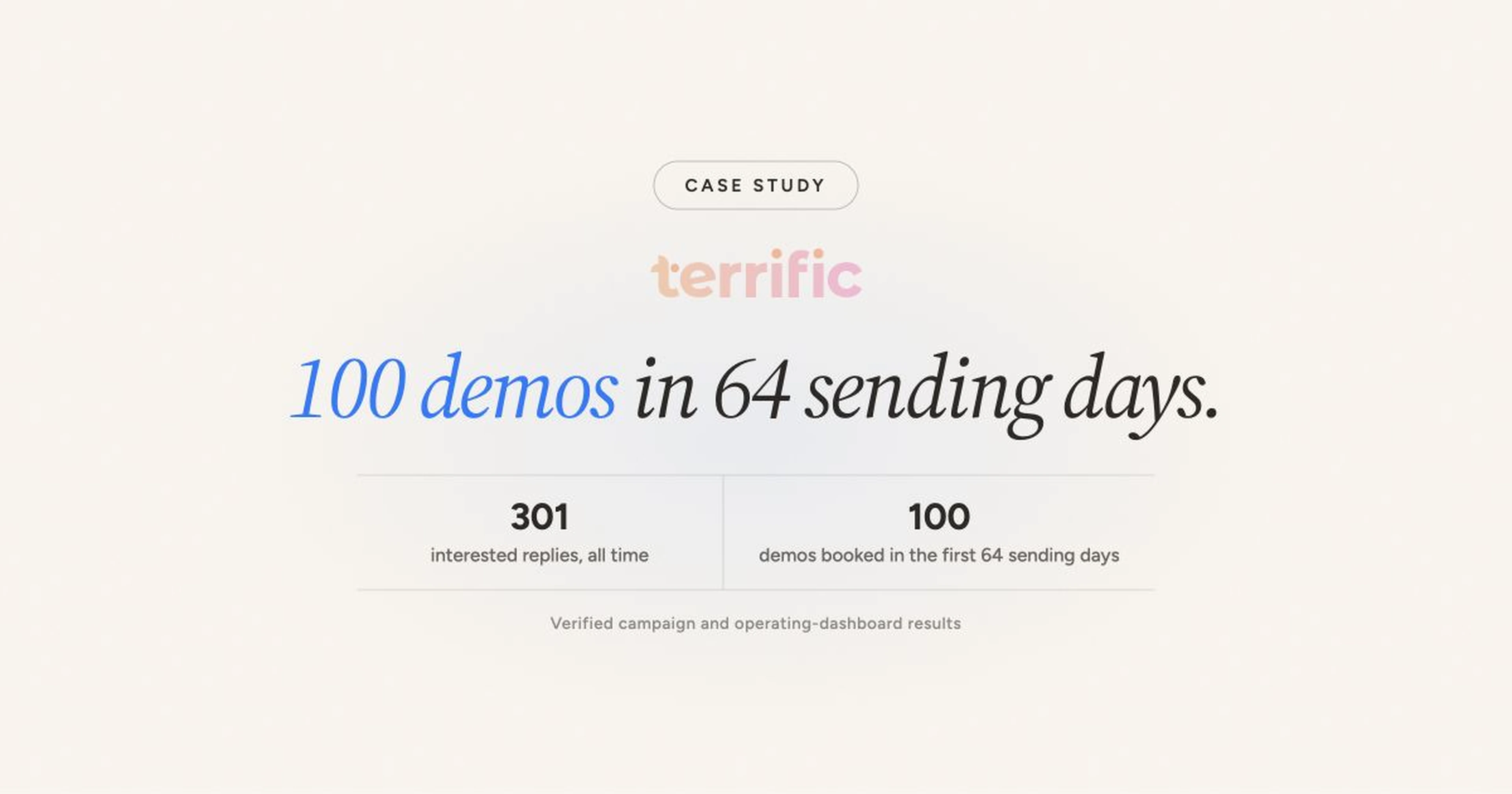
Terrific Live’s result is specific to that engagement. It is not a forecast for another software company. Follow each client card for the market, buyers, and available evidence. See all clients, including our B2B service relationships.
A finite market changes how outreach has to run
Vertical SaaS serves the workflow of one industry or a tightly defined professional market. It is also called vertical software, industry-specific software, niche SaaS, or industry cloud software. The account universe is usually smaller than a horizontal software category, buyer roles vary by workflow, and one misleading message can reach a meaningful share of the market.
Snipe starts with written account rules, buyer roles, exclusions, public research sources, and qualification criteria. That gives the campaign a specific audience and protects future tests from duplicate contact, unsupported assumptions, and broad list expansion.
The operating detail is covered in the vertical SaaS cold-email playbook. Teams still defining their audience can use the B2B SaaS ICP guide before considering managed execution.
What Snipe runs
01Approved account and buyer criteria
You define the industries, company traits, roles, geography, exclusions, and qualification rules. Snipe turns them into research and campaign instructions for approval.
02Research tied to public context
Research uses permitted business information and approved data. A public signal can explain why an account belongs in a segment; it cannot prove private budget, pain, or intent.
03Cold-email copy for one workflow
Each message connects an observable reason for contact to the workflow the product changes. The copy avoids invented familiarity, vague praise, and claims the source cannot support.
04Dedicated sending infrastructure
Cold-email operations run separately from the client's primary domain. Separation helps contain risk, while authentication, list quality, volume, provider policies, and recipient response still determine deliverability.
05Reply handling and qualification
Interested replies follow an approved playbook. Snipe checks the account, role, use case, and campaign-specific requirements before booking an agreed-fit conversation.
06Calendar booking
Qualified conversations reach the client's calendar with the reply context needed to prepare for the call. The client owns the sales conversation and commercial decision.
For the underlying channel and infrastructure model, see the B2B SaaS cold email agency page and the appointment-setting scope.
How one campaign is scoped
Define the account universe
Write rules a researcher can apply: industry subtype, geography, business model, company size or operating footprint when relevant, required context, and exclusions. A category label alone does not create a usable list.
Map the buying committee
Connect the product to the operator who owns the workflow, the technical evaluator, the economic buyer, and any procurement influence. A restaurant operations platform, accounting product, or security tool will reach different roles even when all three sell through demos.
Choose a verifiable reason for contact
Useful context can include public hiring, expansion, a published integration, a new location, a service launch, or another observable business change. The source is recorded, and the message stays within what the source supports.
Write qualification and suppression rules
Customer, active-opportunity, competitor, unsubscribe, and prior-contact suppression protect the market. Qualification criteria keep wrong accounts and roles off the calendar.
Test one clear message hypothesis
One segment and one workflow produce clearer evidence than several industries inside the same test. The campaign changes when replies show that the role, timing, workflow, or offer does not match the market.
Examples of vertical software markets
Each market needs its own account rules, buyer map, workflow language, and qualification criteria. These examples show how the research changes across industries.
Restaurant and food-distribution software
Research can cover location growth, operations hiring, public concepts, ordering workflows, purchasing, inventory, and multi-location reporting.
Accounting and finance software
Account criteria may include company stage, finance-team structure, public systems, close processes, reporting needs, and the roles that own implementation.
Workforce and learning systems
Campaigns can separate HR, talent, training, compliance, operations, and finance buyers instead of treating every people leader as the same persona.
Logistics, fleet, and procurement software
Research can distinguish operators, carriers, shippers, facilities, fleet structures, purchasing teams, finance roles, and the workflow the software changes.
Community and membership software
Account rules can reflect organization type, chapter or member structure, programs, public events, administration, and the people who own engagement and operations.
Cybersecurity software
Security outreach needs precise product categories, technical buyers, economic buyers, trust controls, and claims that stay inside approved evidence. See the cybersecurity guide.
Merchant-facing software has its own page because ecommerce businesses expose a distinct set of platform and store signals. See the ecommerce SaaS solution.
What makes the best lead generation agency for vertical SaaS?
The best fit is a provider that can translate your industry workflow into a reachable account universe, relevant buyer roles, accurate messaging, and accepted sales conversations. For a mid-market software business, ask how the agency protects customers and open opportunities, handles multiple stakeholders, and learns from meetings sales rejects.
Choose a software agency by vertical and operating scope. If the constraint is positioning or offer clarity, compare GTM consulting with outbound execution. If the required work is managed cold email and demo booking, Snipe can assess the segment, proof, account economics, and qualification standard with your team.
Who fits this service
- B2B vertical software sold through a demo or discovery call.
- A definable business buyer and a product tied to a specific operating workflow.
- A stable product, market, and offer that the client can approve before outreach.
- Enough customer value to support researched acquisition and a team able to run qualified calls.
- Written target, exclusion, and qualification rules that both teams can use.
Teams changing their market, core use case, or promise every week need customer discovery before scaled outreach. Consumer apps without a business sales motion, low-consideration self-serve products, and teams seeking paid media, cold calling, or broad GTM consulting need a different provider.
Teams preparing their own first test can start with the B2B SaaS templates by vertical and the deliverability guide.
Frequently asked questions
What is vertical SaaS lead generation?
It is the work of identifying companies and buyers inside a specific industry, contacting them with relevant business context, qualifying interest, and creating sales conversations for software built around that industry's workflow. Snipe provides this through managed cold email.
When does cold email fit a vertical SaaS company?
Cold email can fit when the market contains identifiable business accounts, the product solves a workflow that supports a sales conversation, the offer is stable enough to approve, and the team can run qualified demos. It is not the right primary channel for every software product.
How does Snipe avoid exhausting a small market?
Snipe uses narrow account rules, customer and opportunity suppression, prior-contact records, clear exclusions, contact limits, and one message hypothesis at a time. Reply evidence guides the next test before the audience expands.
Who counts as a qualified demo?
A conversation that meets the written criteria agreed before launch, including the account, role, relevant use case, geography, and campaign-specific disqualifiers. Qualification happens before calendar booking.
Does dedicated infrastructure eliminate domain or reputation risk?
No. Dedicated infrastructure separates cold-email operations from the client's primary domain and helps contain risk. No outbound setup removes deliverability, compliance, or reputation risk.
Which channels does Snipe manage?
Snipe provides email-led outbound: targeting, research, cold-email copy, dedicated infrastructure, reply handling, qualification, and booking. The service does not include paid media, cold calling, Shopify App Store optimization, standalone LinkedIn automation, or company-wide GTM consulting.
What published result can a buyer verify?
The Terrific Live case study documents 301 interested replies all time and 100 demos booked in 64 days of sending. This is one engagement, results vary, and it does not guarantee another company's outcome.

 MaestroX
 Puzzle
 MyLearningHub
 FuelMe
 Pepper
 HeadsUp
 Rallyhood
 Terrific Live
 Seventh Gear AI