8 PhoneBurner Alternatives for SDR Teams (2026)
Compare power, parallel, business-phone, contact-center, and sales-engagement routes before you replace a dialer that may already fit the job.
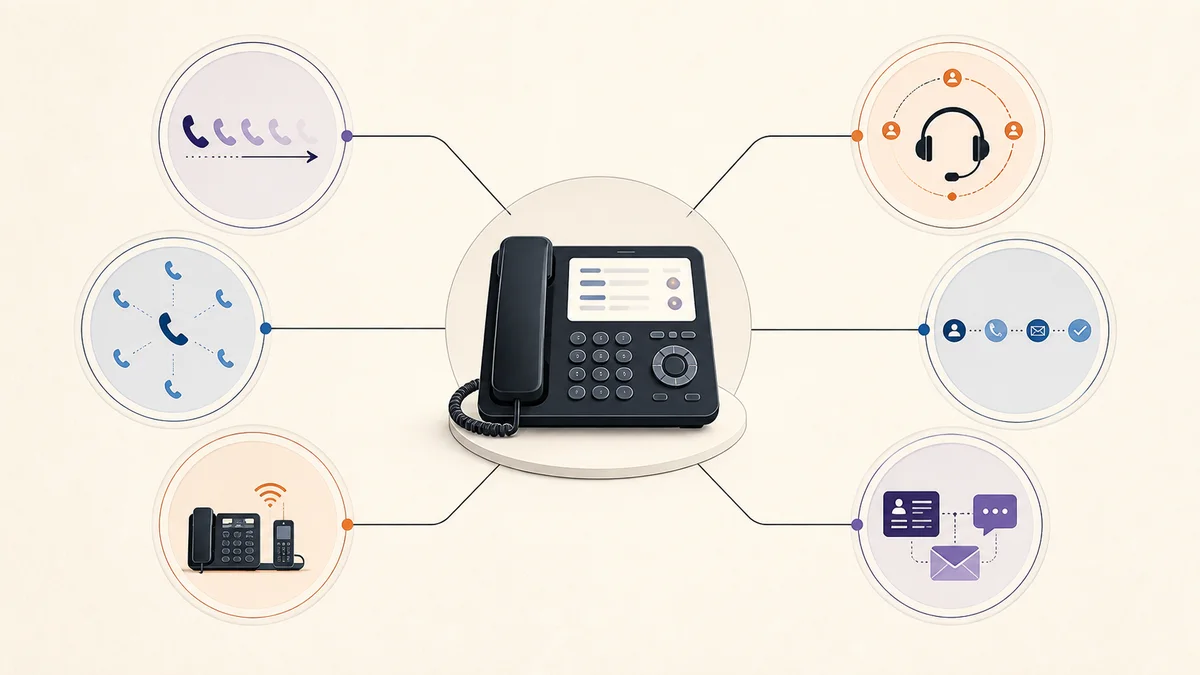
PhoneBurner is still the cleanest fit here when a team wants one-line, delay-free power dialing with workflow automation. Choose Nooks, Orum, or Kixie when parallel dialing is the requirement; JustCall for several dialer modes inside one sales phone system; CloudTalk for broader global telephony; Aircall when shared business calling matters more; 8x8 for contact-center operations; and FrontSpin when the dialer must sit inside a broader sales-engagement workflow.
“PhoneBurner alternative” hides several different buying decisions. PhoneBurner is a single-line power dialer. Nooks and Orum can run several lines in parallel. JustCall combines several sales-dialer modes with business calling. CloudTalk combines power, preview, smart, and parallel dialing with global telephony. Aircall is a broader business-phone system. 8x8 is a contact-center platform. FrontSpin combines dialing with sales-engagement sequences. Kixie combines multi-line dialing, CRM workflow, and SMS.
Those products should not be ranked as if they solve the same job. This comparison starts with the operating model, then shows what an established SDR organization must validate before migration.
PhoneBurner alternatives at a glance
| Route | Dialing / system model | Best when | Validate before switching |
|---|---|---|---|
 PhoneBurner baseline PhoneBurner baseline
|
Single-line power dialer with post-call workflow automation | Reps need delay-free, one-at-a-time strategic calling | Whether parallel volume or broader telephony is actually required |
|
|
Power or parallel dialer, with up to 10 lines | High-volume SDR teams prioritizing live conversations | Bridge behavior, canceled calls, number strategy, and rep controls |
 Nooks Nooks
|
Power and parallel dialer with research, coaching, and virtual salesfloor | Distributed SDR teams want dialing and manager workflow together | Data sources, enrichment cost, CRM writeback, and governance controls |
 Aircall Aircall
|
Business phone system with single-line Power Dialer | Sales and support need shared telephony plus integrations | Professional-plan requirements, list import, admin, and country coverage |
|
|
Business phone system with power, auto, predictive, parallel, and preview dialer routes | Sales teams want several dialing modes plus inbound calling in one system | Plan gates, country coverage, number operations, CRM writeback, and required dialer mode |
|
|
Global phone system with power, smart, preview, and parallel dialing | A distributed team wants outbound dialers and broader telephony together | Dialer add-ons, country and number coverage, CRM behavior, governance, and total contract |
 Kixie Kixie
|
One-, four-, or ten-line dialer with CRM and SMS automation | CRM-centric teams want calling and texting in one workflow | Chrome dependency, SMS registration, simultaneous-answer handling, and logging |
|
|
Contact-center platform with preview and predictive dialing | Outbound belongs inside a governed contact-center operation | Implementation scope, campaign controls, compliance configuration, and total contract |
|
|
Sales-engagement platform with power and parallel dialing | Calls, email, SMS, and social steps need one cadence layer | Sequence ownership, CRM sync, reporting definitions, and migration effort |
How we evaluate
Snipe runs outbound programs but does not sell dialer software, take affiliate fees, or accept payment for placement. This page was checked against each vendor's current first-party product or support documentation on September 5, 2026. We did not run a controlled head-to-head call test across all nine products, so this is a source-backed operating-model comparison—not a performance ranking.
Decide what job the replacement must do
- Dialing model: one-line power, multi-line parallel, preview, or predictive.
- System scope: dialer only, sales engagement, business phone, or contact center.
- Data path: where call lists originate, which CRM objects change, and who owns writeback failures.
- Number operations: registration, reputation monitoring, rotation, remediation, and callback routing.
- Governance: SSO/SCIM, roles, recordings, retention, exports, deletion, data residency, and subprocessors.
- Commercial model: seat minimums, telephony usage, numbers, implementation, support, and contract terms—not the headline seat price alone.
Eight PhoneBurner replacement routes
Nooks: parallel dialing plus the SDR workspace
Nooks supports power and parallel dialing; its current support documentation says parallel mode runs two to five lines, while adaptive modes change active lines dynamically. Its broader product includes number operations, research, battlecards, coaching, and a virtual salesfloor. That makes Nooks the clearest alternative when the buyer wants to change both dialing speed and the manager/rep operating environment. Verify which data, enrichment, and coaching capabilities are included in the proposed package. Review Nooks' official dialer description.
 JustCall: several dialer modes inside one phone system
JustCall's current product documentation separates one-line power dialing from auto, predictive, parallel, and preview modes. That makes it a useful PhoneBurner comparison when a team wants more than one dialing model without separating outbound calling from the wider business-phone system. Confirm which modes are included in the proposed plan, then test number operations, CRM writeback, inbound routing, reporting, and governance with the same cohort. Review JustCall's official dialer description.
 CloudTalk: global telephony with several outbound dialers
CloudTalk documents preview, power, smart, and parallel dialing within a broader international calling platform. It belongs on the shortlist when the buying decision includes global numbers, inbound routing, integrations, and call-center administration as well as outbound volume. Validate dialer add-ons, number coverage, simultaneous-line limits, CRM ownership, security controls, and the total proposed contract rather than comparing one feature. Review CloudTalk's official outbound product page.
 Orum: a focused power-and-parallel dialer
Orum's official documentation supports one-line power dialing and parallel dialing, with the product page advertising up to ten simultaneous lines. It is the more direct route when the requirement is high-volume live-conversation production rather than replacing the whole phone system. A pilot should measure bridge latency, false live detections, canceled calls, task completion, and number behavior at the exact parallelism the team will use. Review Orum's official dialer page.
Aircall: business telephony with a power dialer
Aircall's Power Dialer automatically works through an imported list one number at a time, with wrap-up time for notes and tags. Its support documentation places the feature on the Professional plan and limits it to desktop or web. Aircall is therefore a better PhoneBurner alternative when a company wants shared business telephony and integrations across sales or support—not when parallel dialing is the primary reason for switching. Review Aircall's official Power Dialer documentation.
 8x8: preview or predictive dialing for contact centers
8x8 positions its dialer inside a contact-center system and documents preview and predictive modes, campaign-list management, answering-machine detection, and contextual information for agents. That is a different procurement class from a sales power dialer. It fits when outbound calling must share administration, workforce, CX, or compliance controls with a larger contact-center operation. Review 8x8's official dialer page.
 FrontSpin: dialing inside a sales-engagement platform
FrontSpin describes both power and parallel dialing alongside cadence playbooks, sales email, SMS, and social steps. Shortlist it when the reason for leaving PhoneBurner is stack consolidation around a multichannel sequence layer. Before replacing an existing engagement platform, prove CRM ownership, sequence portability, opt-out behavior, reporting definitions, and what happens to incomplete steps during migration. Review FrontSpin's official platform description.
Kixie: multi-line dialing with CRM and SMS automation
Kixie's current support documentation says its PowerDialer can place one, four, or ten calls at once, while its workflow layer can trigger calls or texts from CRM events. It is the practical route when calling and SMS need to operate from the same CRM-centered workflow. Validate its Chrome dependency, 10DLC and consent processes, number-reputation tooling, multi-pickup behavior, and CRM field mapping with production-like data. Review Kixie's official automation documentation.
PhoneBurner vs JustCall and CloudTalk
PhoneBurner is the narrower purchase: one-line power dialing and the workflow around an outbound call session. JustCall is the broader shortlist when a sales team needs several dialer modes plus inbound calling in one phone system. CloudTalk becomes the closer comparison when global numbers, inbound routing, and contact-center administration are part of the same procurement. Keep PhoneBurner when those additional jobs do not justify the implementation and governance overhead; test the broader systems when they can replace other contracted tools, not merely add features.
PhoneBurner vs Nooks for SDR teams
Choose PhoneBurner when a rep should stay live from the first “hello,” dial one number at a time, and automate dispositions, voicemail, email, SMS, and CRM logging. PhoneBurner's current product page says unlimited power dialing starts at $165 per month; confirm the live quote and required package before budgeting. Choose Nooks when parallelism, list enhancement, live battlecards, coaching, and the shared salesfloor are part of the buying decision. The trade is not “old versus new”; it is a focused single-line workflow versus a broader parallel-dialing workspace.
PhoneBurner vs Aircall for SDR teams
Both can power-dial one contact at a time. PhoneBurner is purpose-built around outbound call sessions and post-call workflow. Aircall is the better comparison when the company wants a shared phone system for inbound and outbound teams, international numbers, or a wider telephony app ecosystem. Compare the complete phone architecture, not just the dialer button.
PhoneBurner vs 8x8 for SDR teams
PhoneBurner keeps a rep on every sequential call. 8x8's documented preview and predictive modes are designed for contact-center campaigns. If a sales team only needs strategic prospecting calls, 8x8 may introduce unnecessary system scope. If outbound belongs inside a governed contact center, PhoneBurner may be too narrow.
Run a controlled 30-day dialer pilot
- Freeze the cohort. Use the same eligible contacts, regions, suppression rules, and list-quality threshold across tools.
- Define the legal operating envelope. Have counsel approve dialing modes, consent logic, DNC controls, recording, caller ID, time zones, and abandoned-call treatment for each jurisdiction.
- Shadow CRM writeback first. Confirm ownership, disposition mapping, tasks, recordings, notes, duplicates, and deletion before reps depend on the new system.
- Use comparable rep blocks. Keep sellers, hours, scripts, offers, and parallelism documented; do not compare a three-line pilot with a one-line baseline without labeling the difference.
- Measure the full funnel. Track valid numbers attempted, live connects, false connects, canceled calls, median bridge time, meetings per 1,000 valid numbers, rep administration time, opt-outs, DNC incidents, and CRM exceptions.
- Review governance. Validate DPA, SSO/SCIM, roles, recording retention, export/deletion, data residency, subprocessors, security evidence, support, and incident escalation.
Keep PhoneBurner if the new system does not improve the pre-agreed constraint after list quality, number reputation, seller behavior, and CRM errors are controlled. Migration effort should be estimated from the actual integration map and contract—not asserted as a universal number.
When the dialer is not the bottleneck
A dialer cannot repair weak account selection, missing direct dials, an undifferentiated offer, poor seller follow-up, or broken handoff. Use the enterprise outbound readiness checklist to locate the constraint. If the company needs an email-led acquisition system rather than more internal calling software, compare the done-for-you B2B outbound scope and the outsourced SDR versus cold-email operating models. A diagnostic is appropriate only after that distinction is clear.